Trivia Crack: Brain Quiz Games
- 4.5
- Rating
- 100.00M
- Installs
- Free
- Price

 Analysis by App-foxy
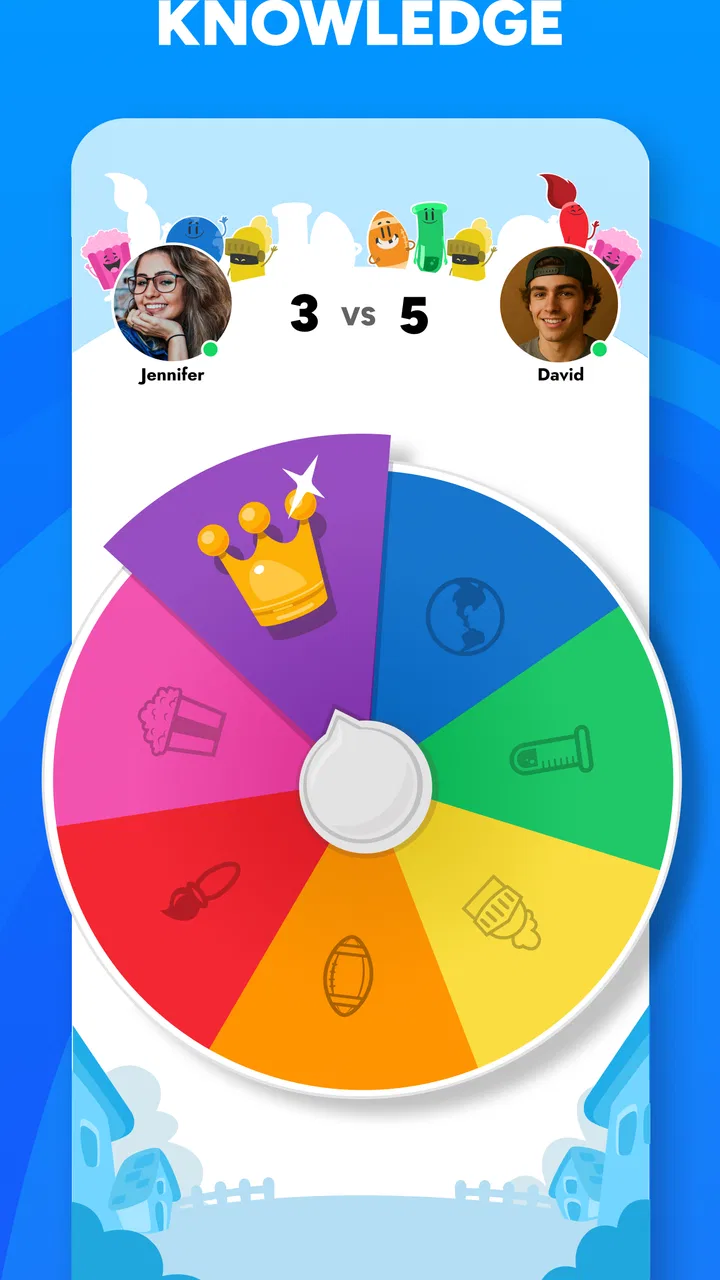
I went into Trivia Crack: Smart Quiz Games expecting a quick way to fill a few spare minutes, and that is still where it feels most natural. It is a free trivia game from etermax, built around answering questions and keeping a friendly competition moving with people you know. The first sessions are easy to understand, but the more important question is whether it remains worth opening after the initial novelty disappears. In my experience, the answer depends less on how much you enjoy trivia in general and more on whether you like a game that grows through repeated short challenges rather than one long, carefully designed campaign.
The game sits in the trivia category, with an Everyone age rating, so it is approachable for family use and casual play. Its public popularity is substantial: it has passed one hundred million installs, carries a 4.5 average from around 7.9 million ratings, and has about 531 thousand written reviews. Those figures tell me that the basic idea has broad appeal, but they do not automatically make every match equally enjoyable. The real test is how it fits into a routine, how much effort it takes to keep playing, and how well it handles the point where familiar questions begin to feel repetitive.
Why the first week feels so easy to enjoy
The strongest part of the opening week is the low barrier to entry. I do not need to learn a complicated control scheme or understand a large collection of rules before I can start answering. That makes it suitable for the moments when I have only a few minutes: waiting for an appointment, taking a break from work, or sitting with family after dinner. The format encourages one more round because each question feels small, while the overall contest gives those small decisions some meaning.
In-Depth Coverage of Trivia Crack: Brain Quiz Games
Playing with friends and relatives changes the experience considerably. A difficult question is more memorable when it affects someone I know, and a lucky answer can become a small running joke. That social layer is the reason I would recommend it ahead of a purely solo quiz app for households or groups that already enjoy friendly competition. It gives people an excuse to return without requiring everyone to be in the same room at the same time.
During my early sessions, I also noticed that the game works best when players have different areas of knowledge. One person may be comfortable with history, another with entertainment, and someone else with science or everyday facts. That unevenness creates the useful tension: nobody has to be an expert in everything, and a match can stay close even when one player is clearly stronger in a particular subject. The best early matches feel like conversation starters rather than tests.
That said, the first-week appeal can be misleading. New questions, new opponents, and the satisfaction of learning the interface create a burst of freshness that will not last forever. If I play too many rounds in one sitting, the game begins to feel less like a social activity and more like a sequence of prompts demanding attention. My practical advice is to let matches remain part of the day instead of trying to consume the whole game at once. Short visits preserve the sense that each round is an event.
What makes the social format useful
The social design is particularly effective for families who want something lighter than a board game but more interactive than watching a quiz video. A parent and child can compare knowledge without needing identical interests, while friends can keep a match alive between ordinary conversations. It is also a reasonable choice for someone who wants a casual challenge but does not want the pressure of real-time multiplayer action. The pace leaves room to answer when convenient, which is a better fit for irregular schedules than games that demand everyone’s immediate attention.
There is a trade-off, though. The game’s value depends heavily on the people available to play with. If my friends are not interested in trivia, or if they stop responding, the emotional reason to return becomes weaker. A solo player may still enjoy answering questions, but the experience loses the personal rivalry that makes ordinary questions feel important. For that user, a dedicated single-player quiz with a deeper progression system may provide a stronger long-term reason to continue.
How I would use it in an ordinary day
A realistic routine would be to begin a match with a family member in the evening, answer a turn during a commute or lunch break, and return later when the other player has responded. This avoids turning the game into a distraction that takes over the day. It also makes wrong answers less frustrating because the match is spread across several small moments rather than compressed into one demanding session.
I would not use it as a study tool in the strict sense. Answering questions can expose me to facts I had forgotten, but the game’s purpose is entertainment and competition, not a structured course. Someone preparing for an exam would be better served by an app organized around a defined syllabus, explanations, and deliberate revision. Trivia Crack is more useful as a light mental warm-up or a way to discover topics that I might later explore elsewhere.
Whether it earns a place after the novelty fades
I find that this game earns its space when it becomes a small, enjoyable routine rather than something I feel obliged to keep up with. In this section, I’m looking at how its free entry and optional purchases affect that decision, then weighing whether the social competition stays worthwhile over time.
Month-to-month value comes from people, not just questions
After the first month, I think the game’s recurring value becomes easier to judge. The central question is not whether there are enough questions to answer once; it is whether I have a reason to care about answering today’s question rather than tomorrow’s. For me, that reason is usually a continuing match with a friend. The game becomes a small shared habit, similar to checking in with someone, except that the check-in has a competitive structure.
This is where it differs from many ordinary trivia alternatives. A static quiz book or a simple question-of-the-day app can offer information, but it usually does not create the same ongoing rivalry. On the other hand, a more serious quiz platform may offer better explanations, stronger subject organization, or a clearer learning path. I would choose this game when connection and convenience matter more than academic depth.
You May Also Like

 Lords Mobile: Kingdom Wars
Lords Mobile Is a Kingdom-Building Routine, Not a Quick Match
A case-by-case verdict on the building, battles, device demands, and social commitments that make Lords Mobile rewarding for some players and exhausting for others.

 PDF Scanner app - TapScanner
TapScanner Makes Paperwork Easier to Capture, Check, and Share
TapScanner makes scanning with a phone feel less like a rescue operation and more like a dependable step in getting work done. Its capture tools are useful, though not flawless.

 Block Blast!
 Shows How Much a Puzzle Game Can Leave Out
A quiet grid game shows why puzzle players increasingly value instant clarity, repeatable skill and low-pressure play—and where the genre still needs to catch up.
 Family Space
 Review: A Shared Routine That Makes Family Life Easier
A parenting app earns its place not by adding more noise, but by making everyday coordination easier. Family Space gets that balance mostly right.

 1Weather Forecasts & Radar
 Makes the Daily Check Worthwhile
A good forecast does more than predict rain. This week's pick turns changing conditions into a clear, practical reason to check before you step outside.
 Clash of Clans
 Makes Patience Part of the Strategy
A village builder with a sharp tactical core, Clash of Clans turns patience into momentum and each raid into a small, satisfying act of judgment.
More From Our News Desk
View All News


The free entry also helps it remain easy to recommend. I can suggest it to a friend without asking them to buy anything first, which reduces the friction of starting a shared activity. However, free access does not mean the experience is completely free of commercial pressure. In-app purchases range from $0.99 to $199.99 per item, so I would approach optional spending carefully, especially if a child is using the device. The sensible way to enjoy the game is to treat purchases as unnecessary extras rather than part of the basic requirement for participation.
One useful habit is to keep the number of active matches manageable. Starting many games at once can make the app feel lively for a few days, but it can also turn into a queue of unfinished obligations. I prefer maintaining a small circle of opponents and allowing each match to develop naturally. This makes every turn easier to notice and reduces the feeling that I am merely clearing notifications.
Small strategies that improve the experience
My first practical tip is to notice which categories repeatedly cause mistakes, not to chase a perfect score. If I miss the same type of question several times, I can treat that weakness as a prompt to read or watch something about the subject outside the game. This turns an entertaining failure into a useful discovery without pretending that the app itself provides a complete lesson.
My second tip is to play with people whose knowledge is different from mine. Choosing only opponents I can easily beat removes much of the long-term interest, while choosing only experts can make every turn feel discouraging. A balanced group produces closer matches and gives the game a reason to remain in regular rotation.
A third insight is that the best time to play is not necessarily when I have the most free time. A long session encourages rushing, and rushing makes the questions blur together. Short, separated visits make me pay more attention to each answer and keep the social exchange visible. This is a maintenance strategy as much as a play strategy: the game remains pleasant when it occupies a small, predictable space instead of competing with everything else on the phone.
The maintenance burden is light, but not invisible
There is no complicated setup to maintain, yet the game still asks for a little social upkeep. Matches are more enjoyable when opponents respond, and that means remembering who is interested, accepting that some games will slow down, and occasionally inviting someone new. If I expect every match to move at the same pace, I will probably become irritated. The relaxed format is convenient, but it also means that momentum can disappear without warning.
Another form of maintenance is managing attention. Trivia games are designed around quick decisions, which makes them easy to open automatically. I found it better to decide in advance whether I am playing one turn or several. Without that boundary, a short break can become a longer distraction, especially when several matches are waiting. This is not a flaw unique to this title, but it matters when deciding whether it deserves a permanent place on a phone.
The current version is 3.357.0, and the game has been available since October 24, 2013. That long presence suggests a product designed to remain active rather than disappear after a brief trend. Still, longevity alone does not guarantee that every player will enjoy the ongoing format. Someone who wants a fresh, finite experience may prefer a one-time quiz game that can be completed and put away.
Where fatigue begins
The first source of fatigue is repetition in the broad sense. Even when individual questions change, the mental rhythm can become familiar: read, choose, wait, repeat. That rhythm is comfortable at first and tiring later, particularly if I am playing without a strong social connection. The game benefits from variety, but variety cannot completely remove the feeling of doing the same kind of task again.
The second source is uneven knowledge. A match can be exciting when categories rotate between players, but a long run of subjects outside my interests can make me feel that the outcome depends more on chance than judgment. That is part of trivia’s appeal, yet it can also weaken the sense of improvement. I enjoy the game more when I accept that uncertainty is built into it rather than expecting a perfectly measured test of ability.
The third source is the emotional effect of stalled matches. A close contest that pauses for too long loses its tension, while a one-sided contest can stop feeling worth the effort. This is why the choice of opponent matters more than it might appear from the simple question-and-answer format. The game is at its best with people who enjoy the exchange, not merely people who happen to have the app installed.
There is also a difference between intellectual challenge and trivia familiarity. Some questions reward knowledge, while others may feel easier because their subject is already part of my everyday interests. I would not use the score as a serious measure of intelligence. It is a snapshot of recall, category comfort, and luck. Keeping that perspective prevents a wrong answer from becoming more frustrating than it deserves to be.
Who should choose it, and who should skip it
I would recommend it to families, friend groups, and casual players who want a low-pressure way to compete asynchronously. It is especially suitable for people who enjoy short sessions and do not need a formal learning path. The Everyone rating makes it an accessible option for mixed-age households, although adults should still pay attention to how in-app purchases are handled on shared devices.
I would be more cautious recommending it to a person who plays alone, dislikes waiting for other players, or wants detailed explanations after every answer. That player may get more value from a solo trivia app, a subject-specific learning tool, or a timed quiz platform with a stronger progression system. I would also skip it for someone who is trying to reduce phone interruptions; the social structure only works if I am willing to return to matches, and that can become another stream of notifications.
It is also not the best choice for a serious group quiz night where everyone needs to participate together in the same room. A traditional board game or a dedicated live quiz format may create a stronger shared moment. This title is better at maintaining a light connection across separate moments than at replacing a complete face-to-face activity.
My long-term verdict
After the novelty fades, I do not think the game earns permanent space automatically. It earns that space when it is attached to real relationships and used in moderation. The questions alone are enough for occasional entertainment, but the lasting value comes from seeing how friends and relatives think, remembering their strengths, and watching a close match develop over time.
That makes my recommendation conditional but positive. If you can name a few people who would genuinely answer, tease, and return to a match, the free download is easy to justify. If you are looking for a deep educational system, a rich solo campaign, or a completely distraction-free experience, another trivia option will probably suit you better. Its staying power is social habit, not endless novelty.
For me, the ideal role is a small recurring ritual: a turn during a quiet break, a rematch with someone who nearly won, or a family challenge that continues through the week. Used that way, this trivia game remains friendly, accessible, and pleasantly competitive. Used in long, repetitive sessions or with unwilling opponents, its weaknesses arrive quickly. I would keep it installed for the right group, but I would not confuse its broad popularity with a guarantee that it belongs on every phone.
Overall, etermax has made a trivia game that is simple to start and surprisingly effective at keeping distant players connected. Its free price, broad age rating, and familiar structure make the first step effortless, while its long-term usefulness depends on careful pacing and good opponent choice. For a casual social quiz habit, it is a solid recommendation; for anything more specialized, I would look beyond it.
FAQs for Trivia Crack: Brain Quiz Games
01What is Trivia Crack: Smart Quiz Games?
Trivia Crack: Smart Quiz Games is a popular trivia app available on both Android and iOS platforms. It offers a wide range of categories such as science, entertainment, sports, and more, allowing players to challenge friends or random opponents in a fun and educational quiz format. The app also features a variety of game modes to enhance the experience.
02Is Trivia Crack free to download and play?
Yes, Trivia Crack is free to download and play. However, it does offer in-app purchases and ads. Players can buy coins and power-ups to enhance their gameplay experience or opt for a premium version to enjoy an ad-free environment and access additional features.
03Can I play Trivia Crack without an internet connection?
Trivia Crack requires an internet connection for most features, especially when playing against opponents in real-time. However, some parts of the game, like daily challenges or practice quizzes, might be available offline. For the full interactive experience, it's best to play while connected to the internet.
04How can I challenge friends in Trivia Crack?
To challenge friends in Trivia Crack, you need to connect the app to your Facebook account or search for friends using their usernames within the app. Once connected, you can invite them to games directly from the app, making it easy to compete and track scores against your friends.
05What are the main features of Trivia Crack?
Trivia Crack offers several engaging features, including a vast question database across various categories, multiplayer mode, and daily challenges. Players can also create their own questions, earn rewards through daily spins, and participate in special events. The app’s user-friendly interface and vibrant design make it suitable for users of all ages.
Pros
- Wide variety of trivia categories.
- Addictive gameplay with friends.
- Regular updates with new questions.
- Easy to navigate user interface.
- Global leaderboard competition.
Cons
- Ads can be intrusive at times.
- Requires internet for full features.
- In-app purchases can be pricey.
- Occasional repetitive questions.
- Limited offline play options.

Trivia Crack: Brain Quiz Games
Gallery